1976
Stereo Three-band Saturation & Width Processor
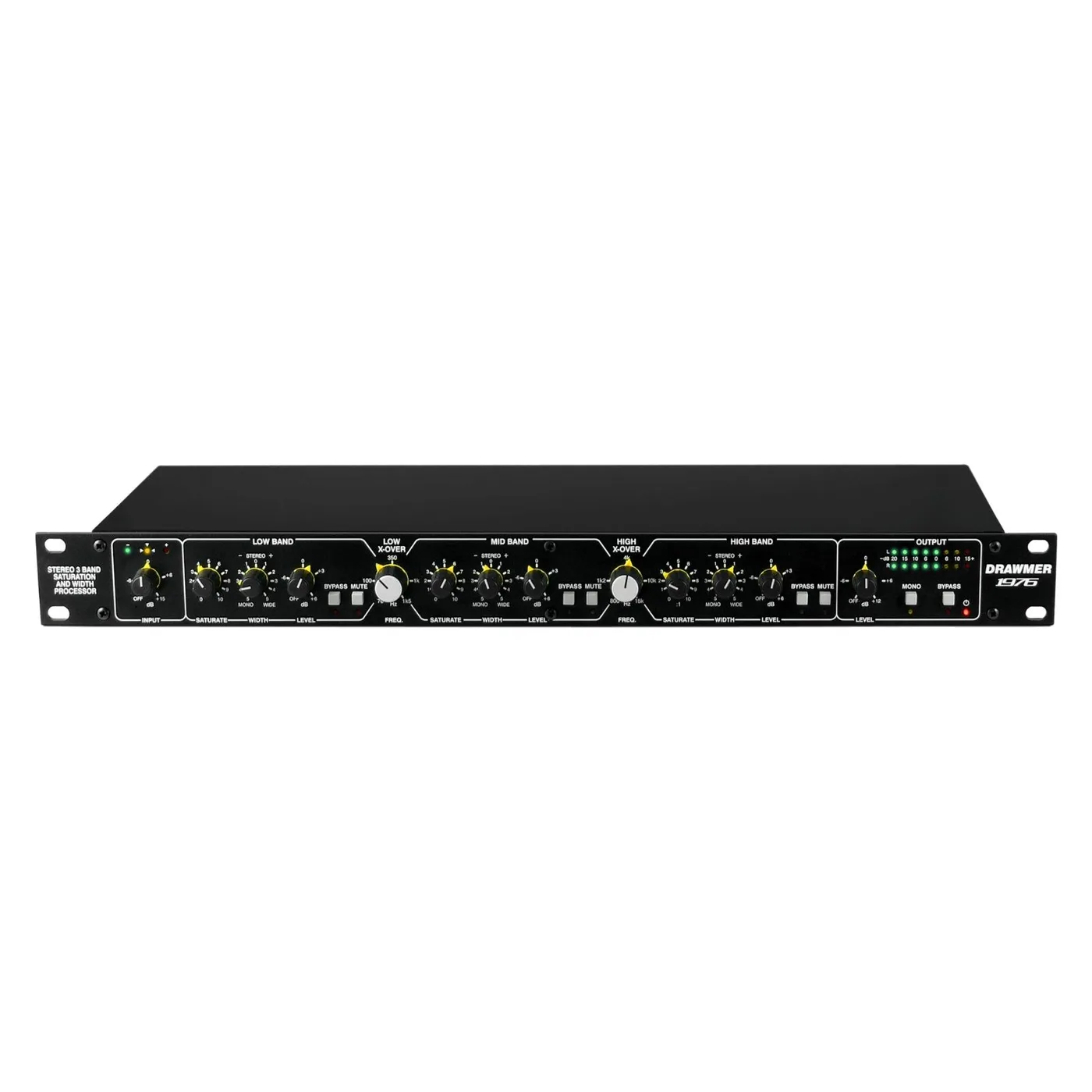
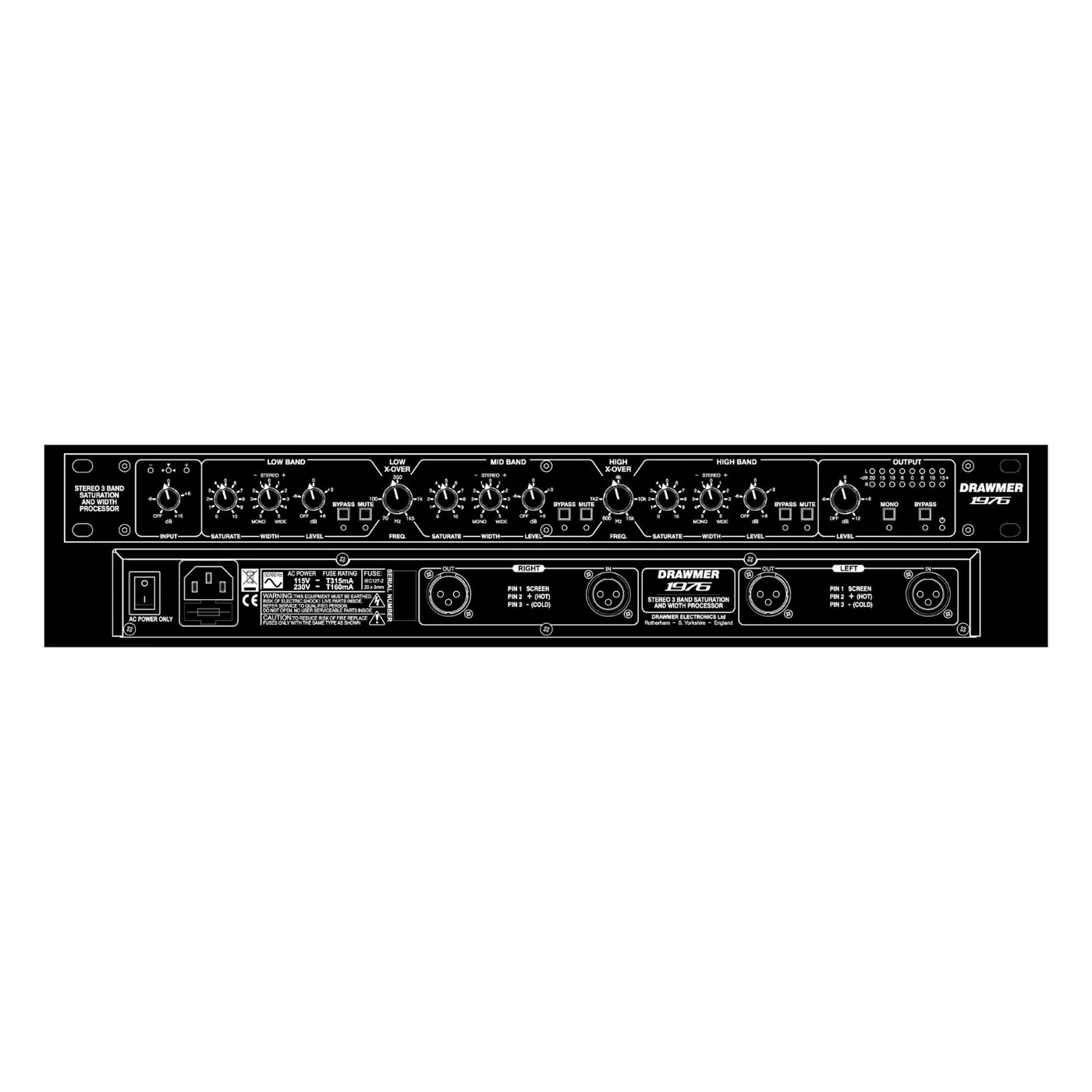
The Drawmer 1976 is a three-band analogue saturation and stereo width processor designed to bring warmth, depth, and energy back into modern productions. With independent low, mid, and high frequency saturation, it allows precise harmonic shaping exactly where it’s needed. Three-band stereo width control adds spatial flexibility, enabling mixes to feel wider, deeper, and more focused without sacrificing balance or mono compatibility. Inspired by classic 1970s hardware and refined for today’s workflows, the 1976 is a powerful creative tool for drums, vocals, synths, bass, and full mixes.
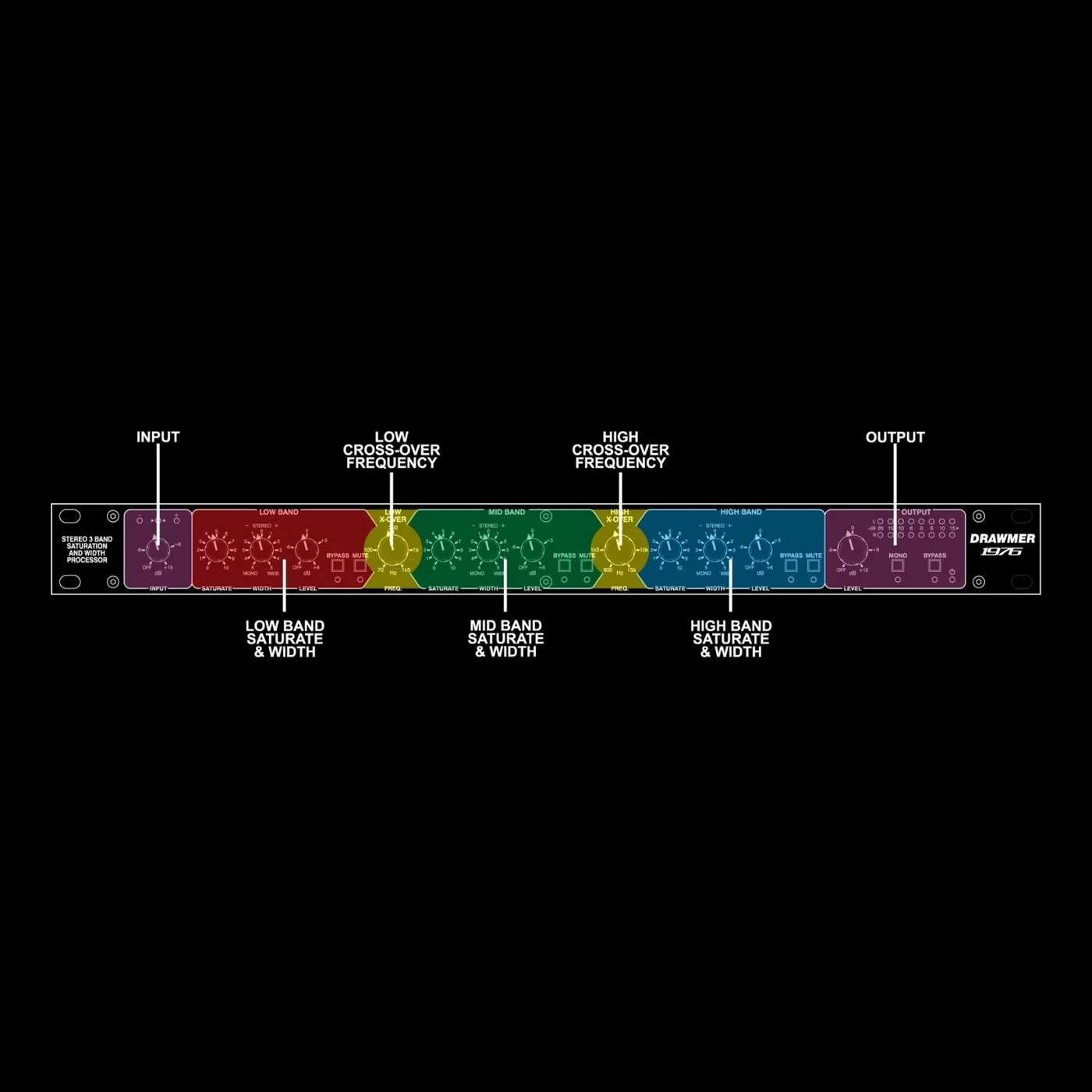
Three-Band Saturation with Analogue Width Control
The Drawmer 1976 is a three-band analogue saturation and stereo width processor designed to inject character, colour, and energy into recordings and live sound. Inspired by classic 1970s hardware, it brings warmth and harmonic richness back into modern workflows with precision control across the low, mid, and high frequency ranges.
Expanding on the celebrated saturation and width concepts first explored in the DC2476 Digital Mastering Processor, the 1976 delivers fully independent analogue saturation per band. From subtle warmth to bold harmonic grit, it introduces the musical imperfections that give vintage equipment its depth, cohesion, and life.
True Analogue Saturation, Three Ways
Unlike single-band processors that treat the entire signal equally, the 1976 allows saturation to be applied exactly where it matters. Add weight and drive to the low end without clouding the highs, or bring presence to vocals and instruments while keeping the mix balanced and open.
This band-specific control makes it possible to shape transients, enhance perceived loudness, and rebalance tonal energy in ways that full-band saturation simply cannot achieve.
What Saturation Brings to Your Sound
In classic analogue recording chains, every stage naturally added harmonic content, creating warmth, cohesion, and excitement. Modern digital systems are often pristine to a fault. The 1976 restores that missing musicality with genuine analogue circuitry, adding presence and depth that plug-ins struggle to replicate.
Creative Applications Across the Mix
Saturation is effective on almost any source, but the 1976 truly shines when used creatively:
- Percussion: Adds punch and glue to drums while taming harsh transients
- Bass: Brings flat basslines to life with weight, harmonics, and authority
- Synths: Warms digital sources with analogue richness and edge
- Vocals: Enhances fullness, smooths sibilance, and improves presence
- Full Mixes: Introduces cohesion, depth, and vintage-style harmonic polish
Three-Band Stereo Width Processing
Beyond saturation, the 1976 features three independent bands of stereo width control. This allows the stereo image to be widened, narrowed, or refocused within specific frequency ranges, adding depth and dimension without compromising mono compatibility.
Open up the high frequencies for an expansive soundstage while keeping the low end tight and centred, or narrow the midrange to improve focus and clarity. All controls are stereo-linked, ensuring adjustments remain intuitive, balanced, and musical.
Mid-Side Precision for Professional Imaging
The width section is based on an M/S (Mid-Side) encoder/decoder architecture. The Width control adjusts the balance between Mid and Side information, delivering precise, frequency-targeted stereo imaging. The result is width, depth, and polish that elevate mixes from clean to compelling.
“It really does shine in giving the user access to a ’70s analogue vibe using only a few knobs and the minimum of effort.”
— JG Harding, Sound On Sound
Features
- Three-band all-analogue saturation adds vintage warmth, character, and harmonic detail to any source
- 1970s-inspired design restores analogue musicality and removes the sterile edge of digital recordings
- Independent three-band stereo width control adds depth, dimension, and spaciousness to mixes
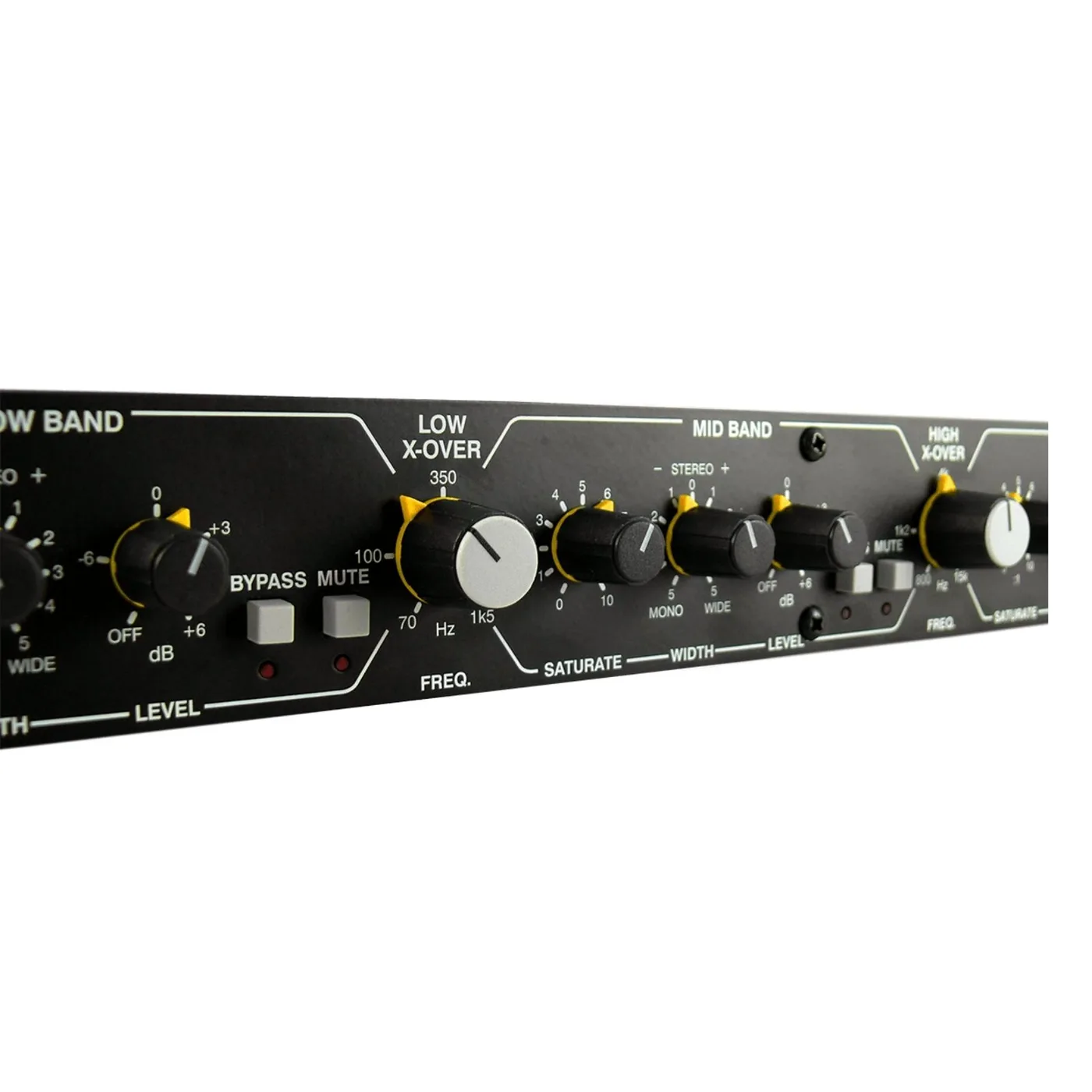
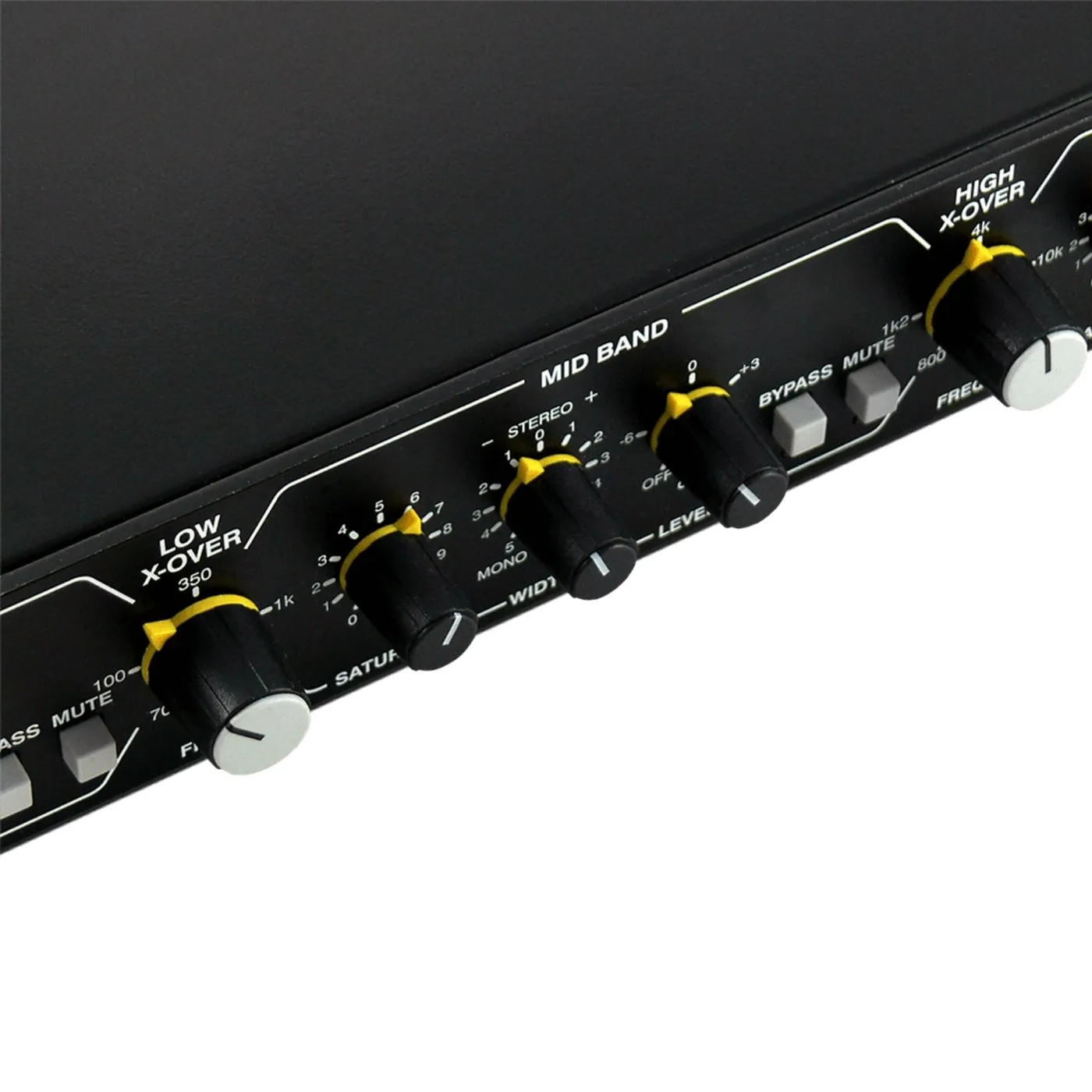
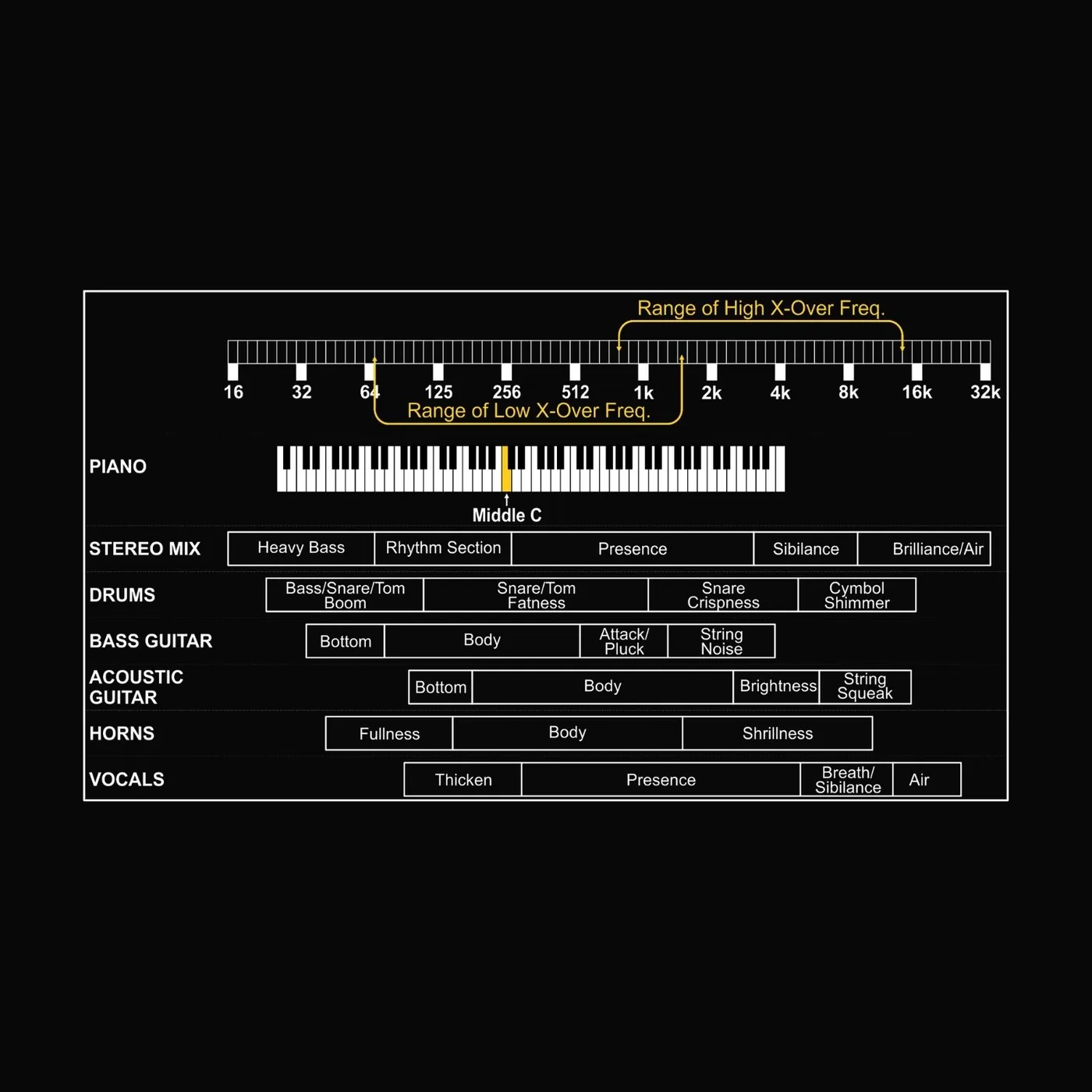
- Variable crossover points allow precise targeting of saturation across lows, mids, and highs
- True stereo operation with a single set of controls for perfectly matched left and right channels
- Switchable stereo or mono operation, with Mono mode for phase and stereo image checking
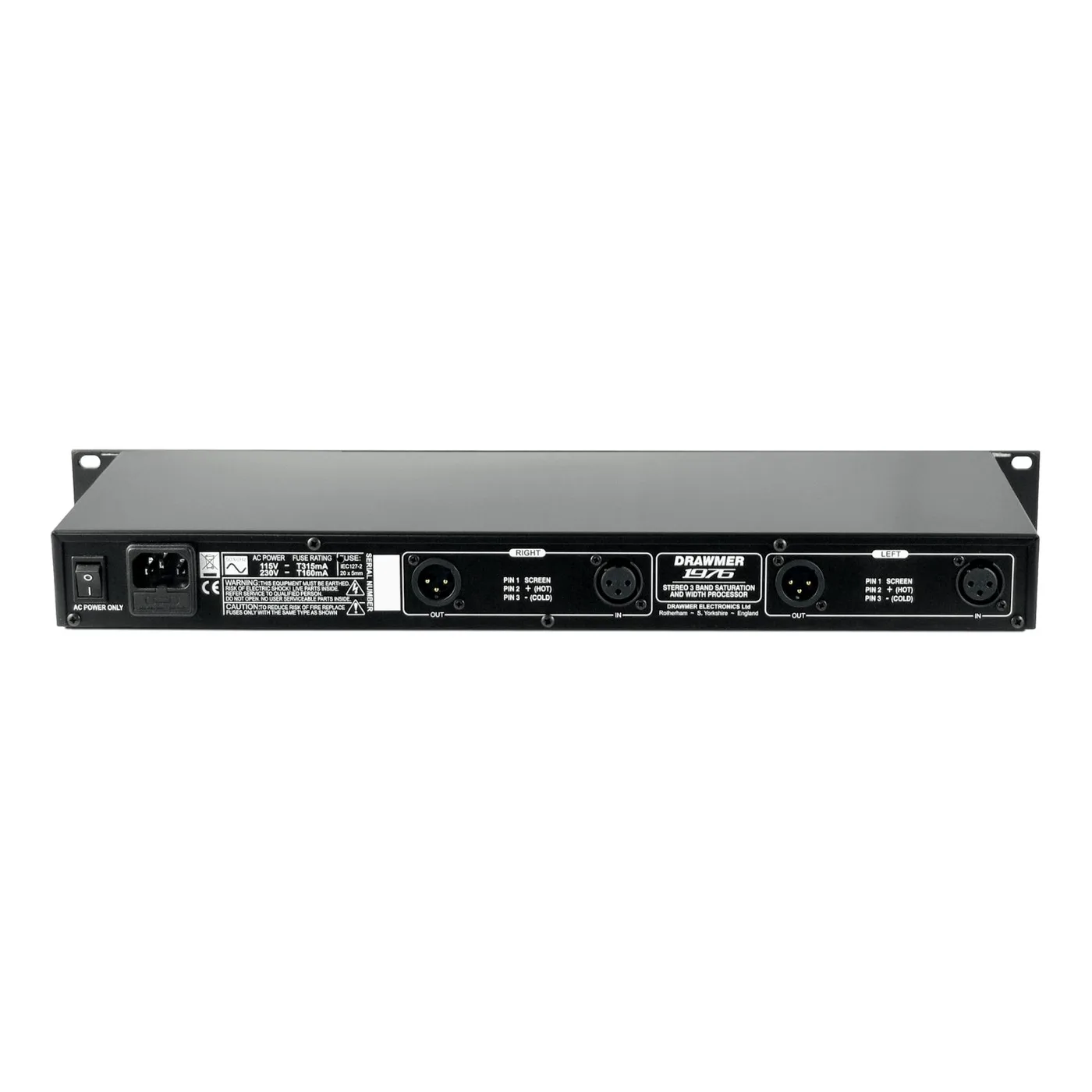
- Internal low-hum toroidal linear power supply with rear-panel voltage selector for worldwide use
- Rugged steel chassis with precision aluminium front panel for classic Drawmer durability
- Designed and handmade by Drawmer in the United Kingdom
Specifications
| Input Impedance | 20k Ohms or greater |
| Maximum Input Level | +26 dBu |
| Output Impedance | < 100 Ohms |
|
Maximum Output Level Into 10k Ohms load |
+26 dBu |
| Frequency Response | 20 Hz – 20 kHz ±0.2 dB |
|
Crosstalk L/R @ 1 kHz |
< –75 dB |
|
Distortion (THD & Noise) @ 1 kHz, 0 dB (ref +4) |
0.007% |
| Power Requirements |
115 V or 230 V at 50–60 Hz 15 VA |
|
Fuse Rating @ 230 V |
T160 mA |
|
Fuse Rating @ 115 V |
T315 mA |
| Fuse Type |
20 mm × 5 mm, Class 3 Timed-Blo, 250 V working Conforming to IEC 127-2 |
|
Case Depth |
202 mm |
|
Case Width |
482 mm |
|
Case Height |
44 mm |
| Weight | 2.8 kg |
In the interests of product development, Drawmer reserve the right to modify or improve specifications of this product at any time, without prior notice.
Downloads
- 1976 User Manual
- Higher Resolution Images of the 1976
- 1976 Literature
- Reviews
- READ: 1976 Review ~ Sound on Sound
- READ: 1976 Review ~ Tape Op Magazine
- WATCH: 1976 Review ~ MixBusTV
- WATCH: 1976 Demo ~ Yave Rust
- WATCH: 1976 Demo ~ Teddy Coke (in Hungarian)
- WATCH: 1976 Demo ~ Shred Shed Studios
- WATCH: 1976 Demo ~ Herr Shield