
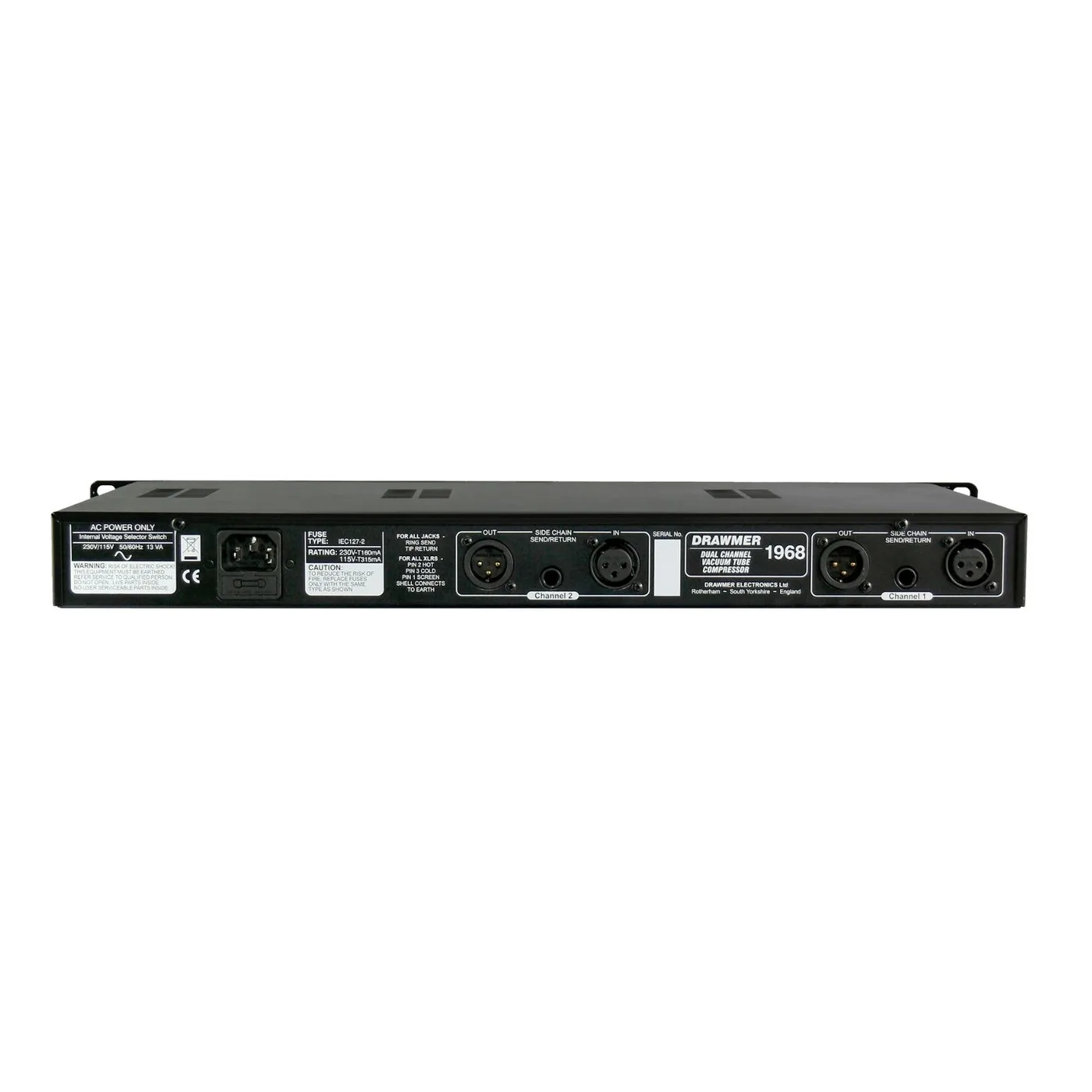
1968
Dual Vacuum Tube Compressor
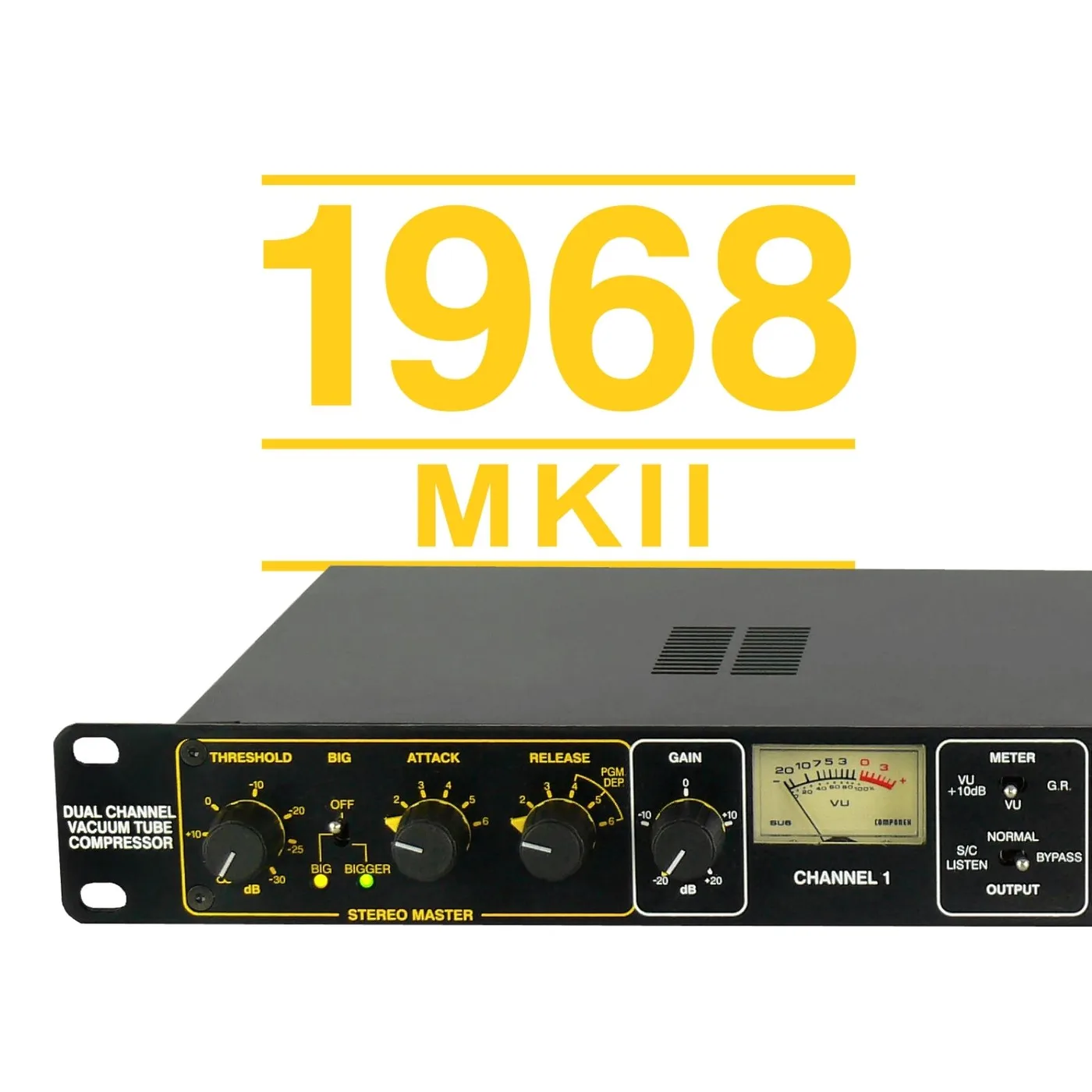
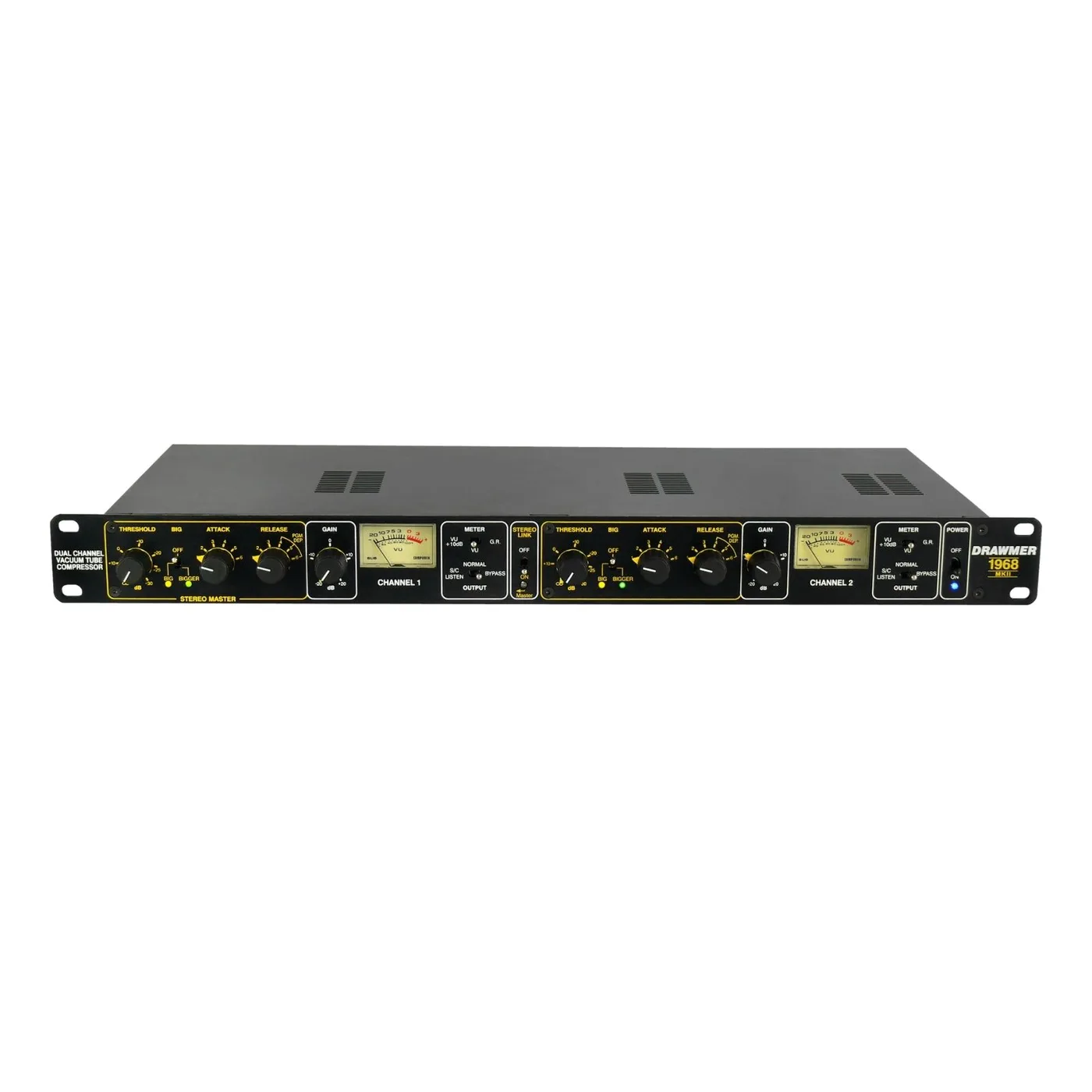
The Drawmer 1968 MkII is a stereo tube bus compressor that blends classic valve warmth with the speed and accuracy of modern FET compression. Designed for mix-bus, mastering, and critical subgroup duties, it delivers smooth, transparent control that remains open and musical even under heavy gain reduction.
Replacing the original valve gain-reduction stage with a fast-acting J-FET circuit, the 1968 MkII offers superior transient response and precision, while a 12AX7 valve make-up gain stage restores weight, depth, and harmonic richness. Its soft-knee compression characteristic removes the need for ratio controls, ensuring a natural, progressive transition into compression that flatters full mixes, vocals, and acoustic material alike.
Extensive attack and release options, full side-chain access, and Drawmer’s signature BIG and BIGGER modes allow low frequencies to remain powerful and controlled without pumping. With comprehensive metering, flexible monitoring modes, and a compact 1U chassis, the 1968 MkII is a refined yet powerful tool for modern analogue compression.
Vintage Tube Compression with Modern Precision
The Drawmer 1968 MkII combines classic valve warmth with fast, accurate FET compression to deliver refined stereo bus control for mixing and mastering. Designed to remain open and musical even under heavy gain reduction, it offers transparent dynamics management while preserving depth, punch, and stereo clarity — all within a compact 1U rackmount chassis.
Building on the legacy of the original Drawmer 1960, the 1968 MkII replaces the valve gain-reduction stage with a high-speed J-FET circuit. This delivers greater transient accuracy and control than traditional opto designs, while a 12AX7 valve make-up gain amplifier restores harmonic richness and weight, providing up to +20dB of output gain.
Smooth Soft-Knee Compression
The compressor’s soft-knee characteristic removes the need for ratio controls, allowing compression to engage gradually and musically as signals approach the threshold. This ensures a natural transition into gain reduction, making the 1968 MkII especially well suited to stereo buses, full mixes, vocals, and acoustic instruments.
Extensive Timing Control
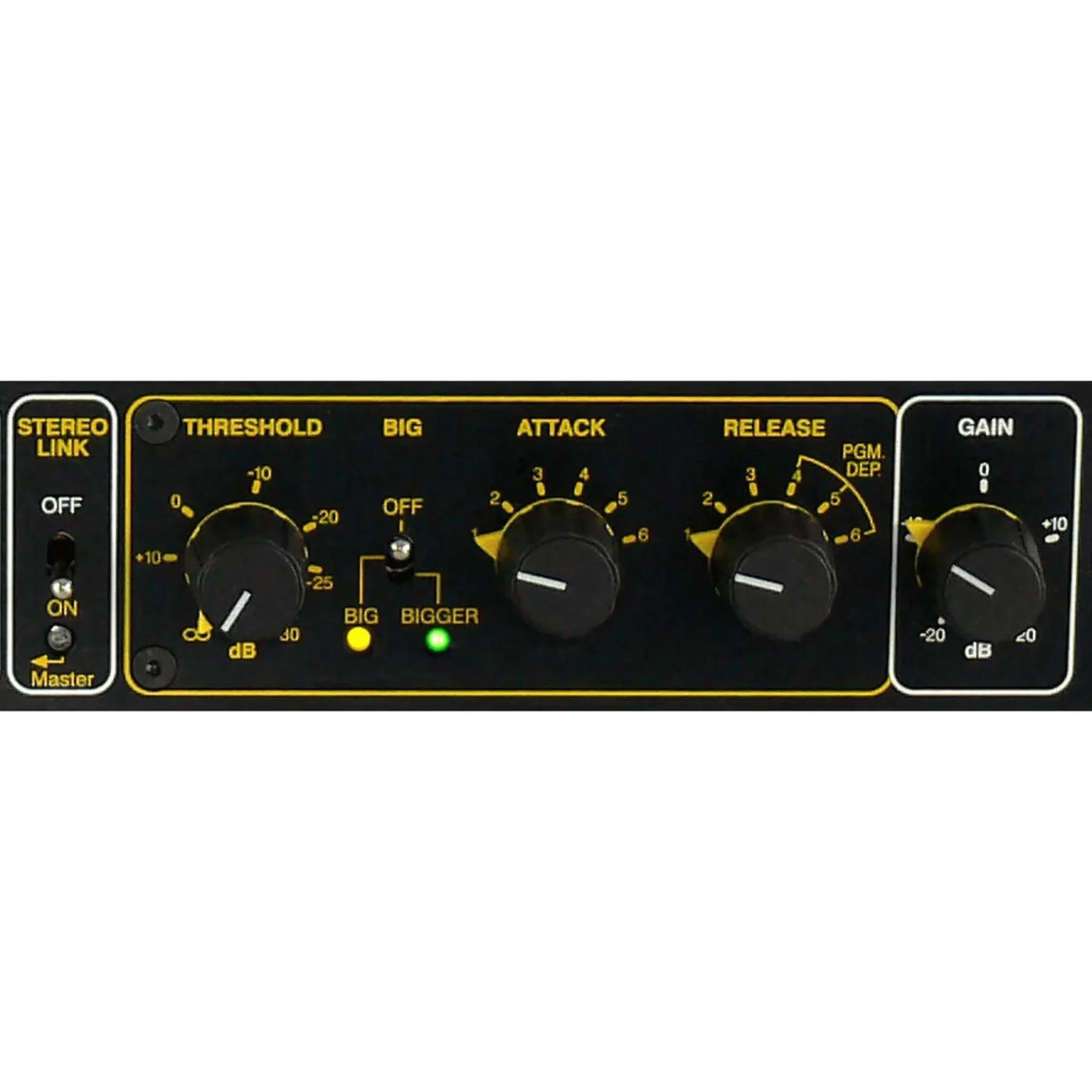
Six selectable attack times (2, 9, 15, 25, 30, and 50 ms) allow precise transient shaping, from fast, assertive control to slower, more forgiving compression. Release options include three fixed settings (100 ms, 500 ms, 1 s) and three programme-dependent modes that automatically adapt to complex material, maintaining smooth, consistent dynamics across evolving performances.
BIG & BIGGER Low-Frequency Control
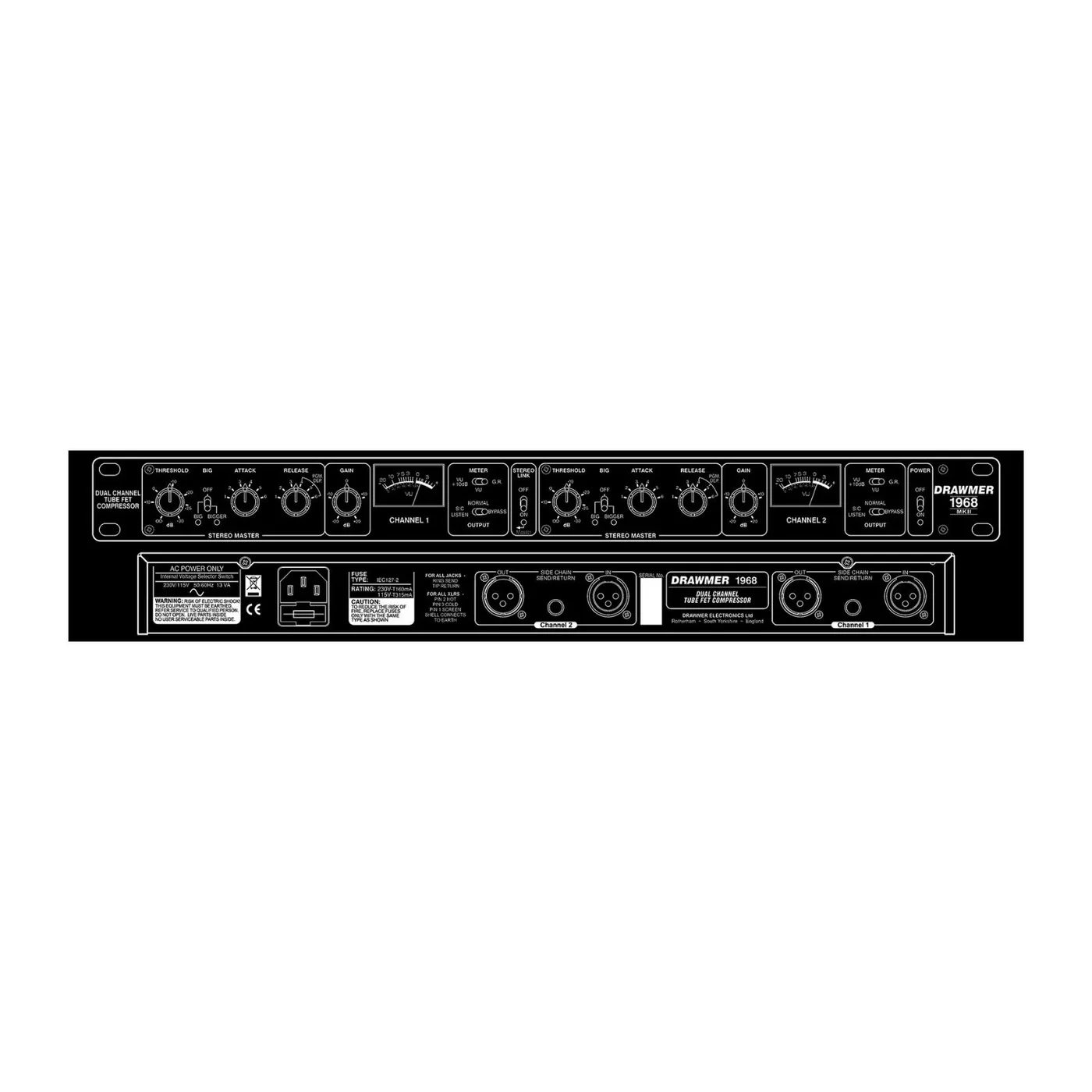
Each channel features Drawmer’s signature BIG and BIGGER modes, designed to reduce compression of fundamental low frequencies while still controlling their harmonics. This prevents low-end pumping and preserves punch, allowing heavier compression without sacrificing clarity or bass impact. The result is a tighter, more extended low end with a smoother overall balance.
Side-Chain & Monitoring Flexibility
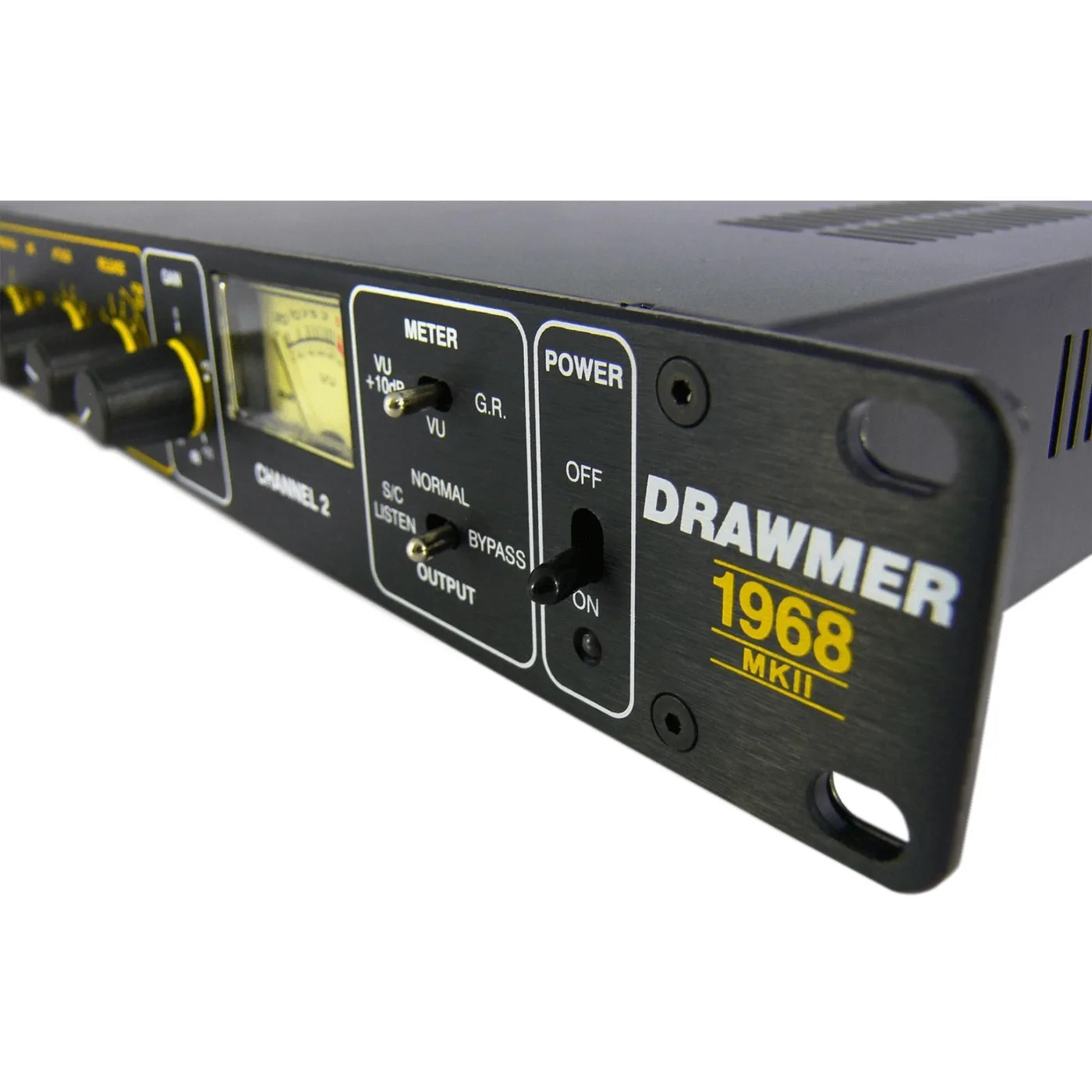
Full side-chain access enables external equalisation for de-essing or frequency-conscious compression, expanding creative and corrective possibilities. Dual illuminated VU meters display output level, gain reduction, or VU +10dB mode for higher operating levels, with clear visual warning as clipping is approached.
Output & Bypass Control
A three-way output switch allows selection between normal operation, hard-wired bypass, or side-chain listen, providing complete monitoring confidence and easy A/B comparison. With its blend of speed, warmth, and musical control, the Drawmer 1968 MkII remains a trusted analogue centrepiece for modern mix and mastering workflows.
Features
- Dual-channel valve / FET compressor combining tube warmth with fast, accurate dynamics control
- Two soft-knee compressors with variable threshold, attack, release, and output gain
- Switchable BIG and BIGGER modes on each channel for enhanced low-frequency control
- Dual-mono or true stereo link operation for flexible mix and bus processing
- Side-chain access with side-chain listen for de-essing or frequency-conscious compression
- VU metering displays gain reduction or output levels for accurate monitoring
- Switchable +10 dB VU mode re-scales meters for operation at higher output levels
- Illuminated VU meters with red warning glow indicate approaching clipping
- Balanced +4 dBu XLR inputs and outputs for professional studio integration
- Rugged steel chassis with precision aluminium front panel ensures long-term reliability
- Designed and handmade by Drawmer in the United Kingdom
Updates to the 1968 MkII (Customer-Driven Enhancements)
- Expanded BIG mode now includes BIGGER, with selectable filters at 75 Hz and 150 Hz
- Internal jumpers allow the soft-clip stage to be removed if required
- Internal jumpers provide an additional +6 dB of output level for hotter operating environments
- Improved power supply design lowers the overall noise floor
Specifications
| Input Impedance | 20k Ohms |
| Maximum Input Level | +20 dBu |
| Output Impedance | < 50 Ohms |
| Maximum Output Level Into 10k Ohms load |
+21 dBu |
| Bandwidth –1 dB |
< 17 Hz to 28 kHz |
| Bandwidth –3 dB |
< 10 Hz to 47 kHz |
| Noise @ Unity Gain 22 Hz – 22 kHz (RMS) |
–85 dB |
| Crosstalk @ 1 kHz |
Better than 100 dB |
| Crosstalk @ 10 kHz |
Better than 70 dB |
| Distortion (THD & Noise) @ 1 kHz, Line input, Bypass selected |
< 0.01% |
| Distortion (THD & Noise) @ 1 kHz, Line input, Normal selected |
< 0.35% |
| Power Requirements |
115 V or 230 V at 50–60 Hz 13 VA |
| Fuse Rating @ 230 V |
T160 mA |
| Fuse Rating @ 115 V |
T315 mA |
| Fuse Type |
20 mm × 5 mm, Class 3 Timed-Blo, 250 V working Conforming to IEC 127-2 |
| Case Depth |
225 mm |
| Case Width |
482 mm |
| Case Height |
44 mm |
| Weight | 4.0 kg |
In the interests of product development, Drawmer reserve the right to modify or improve specifications of this product at any time, without prior notice.